Lesson 01 / 06
Plan a day outside
Know your goal. Prepare options. Keep learning from the day.
By the end: Connect your goal, knowledge and preparation to the decisions you make when circumstances change.
Your lesson reviewNo review recorded
Learn from the picture
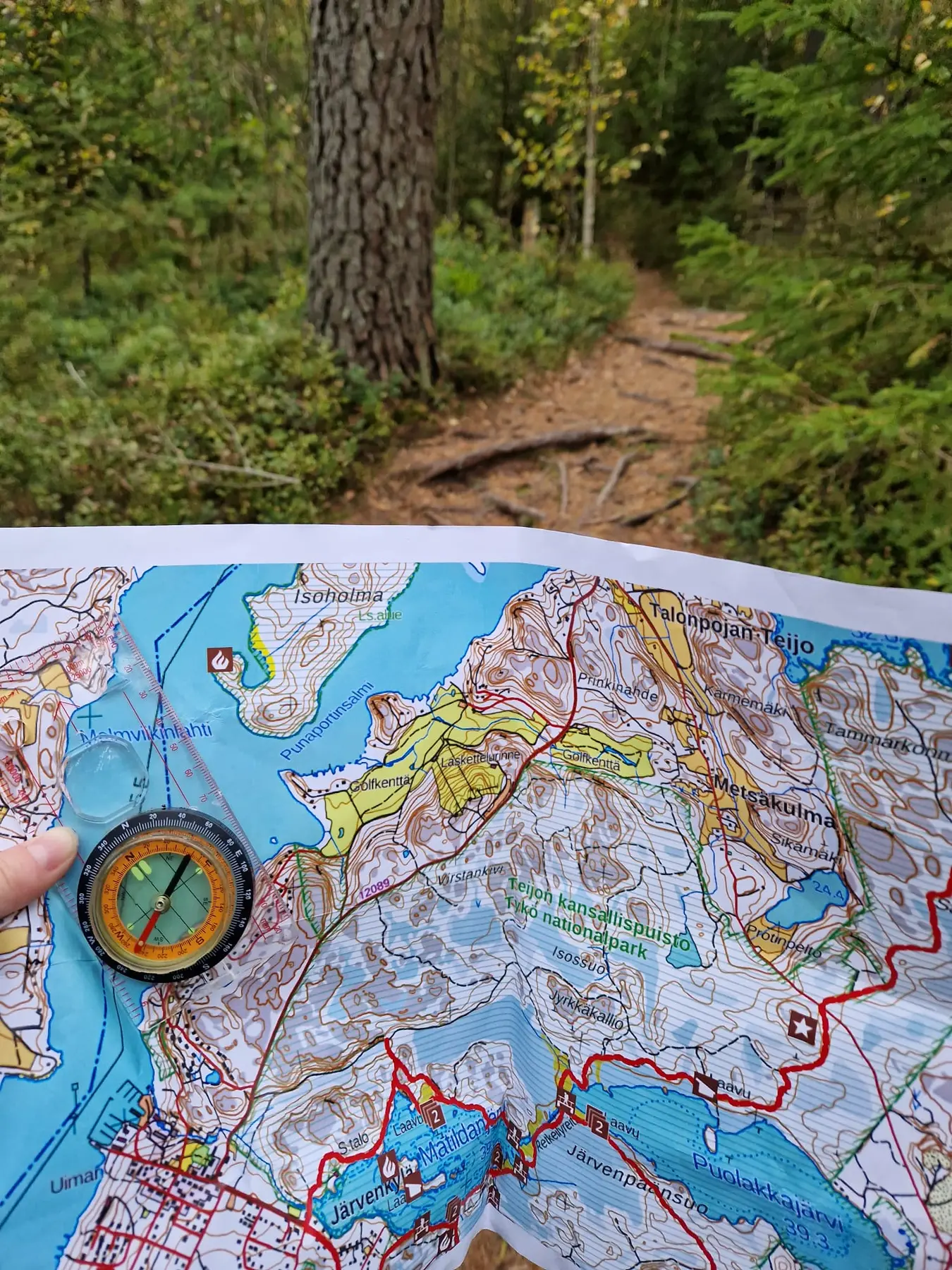
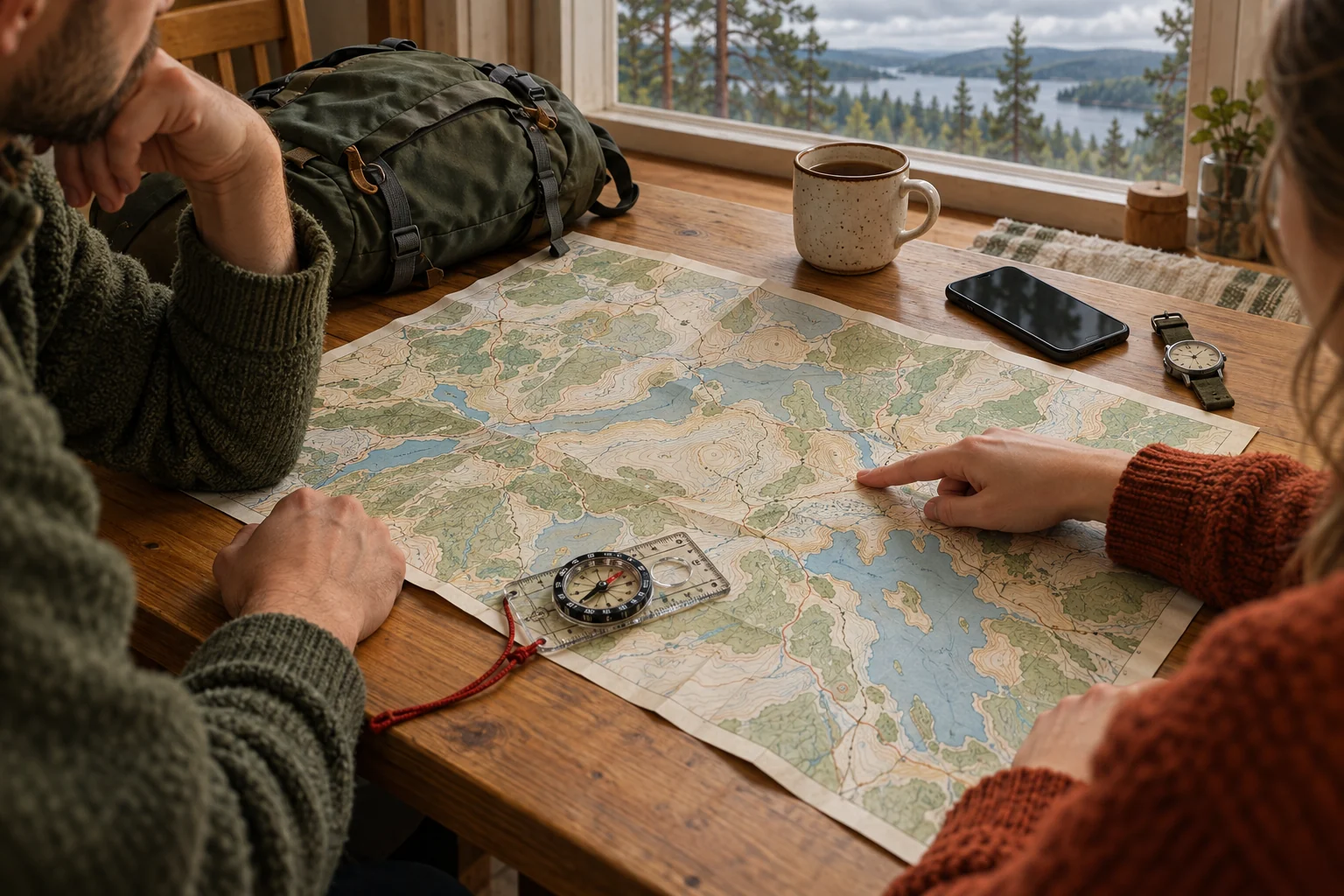
What can you see—and what still needs checking?
- Find something for place, direction and time.
- Can this picture tell you today’s forecast or the route’s condition?
Compare your observations
The map, compass and watch support planning. Their presence does not prove that the route, weather or return arrangements have been checked. A picture of preparation is a starting point for questions, not evidence of readiness.
Prepare options, then reassess
Knowledge, preplanning and adaptation support each other. Before leaving, learn what the route and equipment require and prepare useful alternatives. During the day, ask: What are we trying to achieve? What has changed? What do we actually have and know? What is the best next step, and when will we check again? That step might be a clothing adjustment, a different break, a suitable route change, a return or postponement. Choose according to the situation and the goal.
Start with the goal and the people
Write one sentence about what matters today: a relaxed snack with a friend, observing nature or practising map reading. Separate that purpose from your preferred route. Ask everyone about experience, mobility, breaks and worries. A shorter route may still meet the goal; if the goal requires conditions or skills you do not have, change the goal or arrange a better opportunity.
Read beyond the distance
Read the destination’s route description: surface, climbs, facilities, access and current notices. Find the exact starting point and how you will get home. For this first practice, choose a short marked route in a familiar area with a companion. Check the local forecast, warnings and daylight for your date, then recheck before departure.
Give the day room to change
Separate travel time, walking, breaks and spare time. Do not treat a route’s published duration as a promise for your group. Work backwards from your planned finish, comfortably before darkness. Set a point and time to review progress. A turnaround time means acting on the return plan then; it is not the time to start debating it.
Write a plan someone else can understand
Record the date, route, starting point, group, return time and a shorter alternative. Share it with a trusted contact and agree when you will report back and what they should do if you do not. Tell them if plans change. ‘We will see how it goes’ is not a backup; ‘we will use the short loop or postpone’ is a decision you can act on.
A goal, two routes, one time window
Build a day that fits
Choose a goal and compare two routes. Change the time available or arrive late, then see what you need to reconsider.
Fictional exercise: these routes, walking estimates and time allowances are invented for learning. They do not describe a real destination or a recommended safety margin.
You and a companion are planning a short, marked walk in daylight. For this exercise, both routes are open and suitable for the group and conditions. Your departure deadline is fixed. Travel to and from the destination is outside the time window below.
Keep 20 minutes for a seated snack. Both routes have a suitable stopping place in this scenario.
Birch loop selected. The time budget below now uses this route.
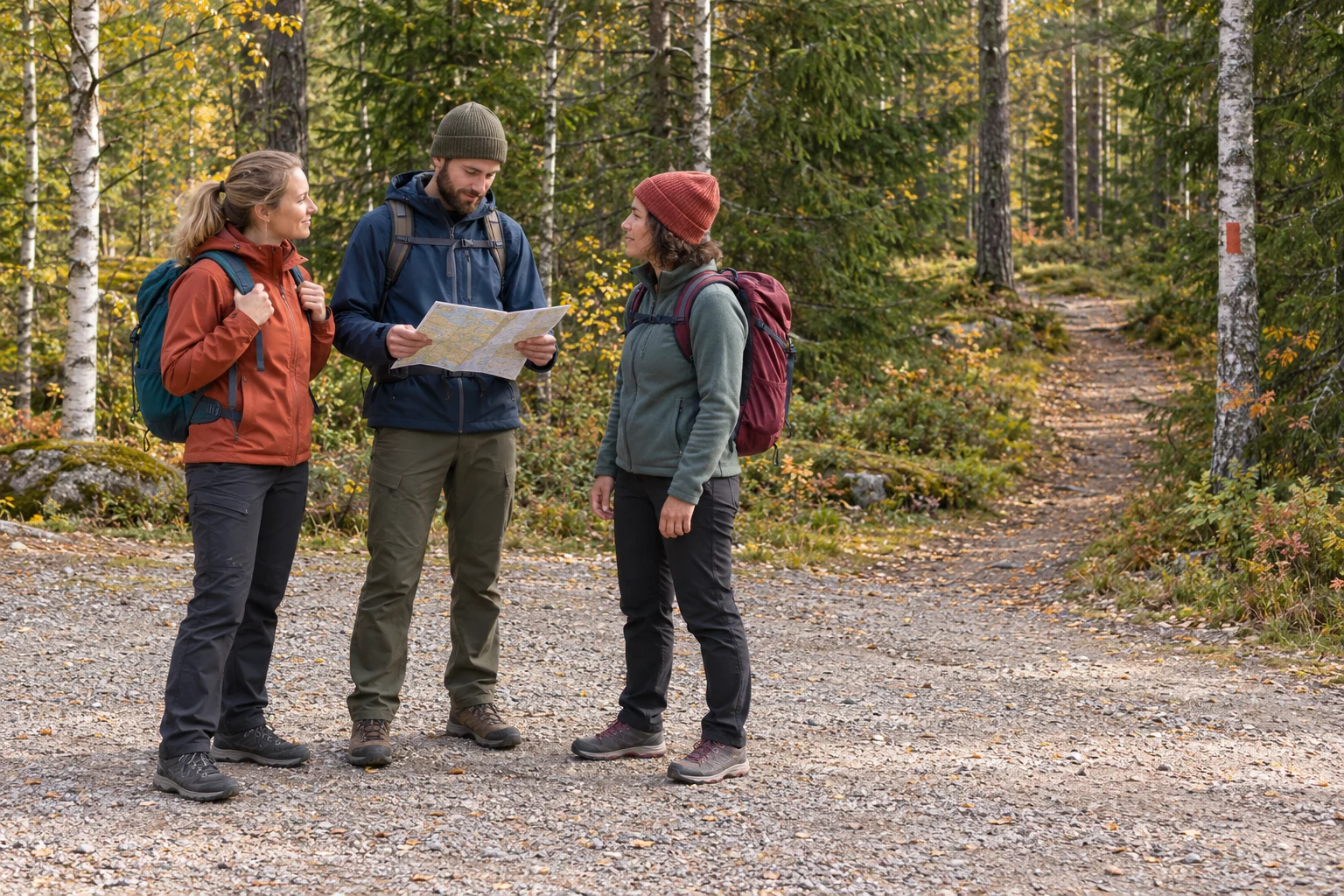
Look at the two pictures. Where might you pause, and where might you check your direction? What would you still need to know before choosing a real route?
Compare what the pictures tell you
The bench suggests a possible stopping place; the fork suggests a place to check your direction. Neither picture tells you the whole route’s length, condition, accessibility or number of junctions. Use the supplied descriptions for this exercise. For a real outing, check current route information and your group’s needs.
See where the time goes
The calculation uses the longer end of the walking estimate, plus your goal’s stopping time, 10 minutes for a shared check before walking and 20 minutes reserved for the unexpected. Those two allowances are fixed only for this exercise.
- Arrival delay
- 0 min
- Starting check
- 10 min
- Walking
- 60 min
- Goal stops
- 20 min
- Reserved time
- 20 min
- Unallocated time
- 10 min
10 minutes unallocated
120 minutes remain after arrival. This plan needs 110 minutes, including the reserved time.
There are 10 unallocated minutes in addition to the 20 already reserved. That is a result of this fictional calculation, not evidence that a real outing is suitable.
The route has the features needed for your chosen goal in this scenario. A route fitting the clock and the goal is a useful starting point for checking the real situation.
Try a second case
Choose map practice, Junction loop, 150 minutes and an on-time arrival. Then arrive 15 minutes late. What can you change? Compare Birch loop, and notice that saving time also changes the available practice points.
Explain the next decision
- What matters most today, and which part of the plan can change?
- What equipment, knowledge and skills would support this choice? What still needs checking?
- What observation would make you reassess, and where or when would you check progress?
Your explanation is your own record and is not automatically graded. For a real day, verify the route, group pace, weather, daylight, equipment, travel and return arrangements.
This exercise stays separate from your real trip plan. Your choices and note are included when you save the course. Downloads also keep unfinished writing.
Your practical task
Make your first route brief
- Name the purpose of your day and what can change while still meeting it. Choose a familiar destination and record its route page and starting point.
- Make a timeline with travel, walking, breaks, spare time and your review/turnaround point.
- Discuss one possible change with your companion: what knowledge and resources would help, what would you adjust, and when would you reassess? Add the decisions to lesson 6’s plan.
Use paper or your own notes for this task. Your final plan is in lesson 6.
Record this lesson’s review
Planning task: no confirmation yet. Review the task
You can check answers at any time using the buttons above. To record a lesson review, check all three answers correctly and complete the planning task. The review mark records your study, not a qualification.